
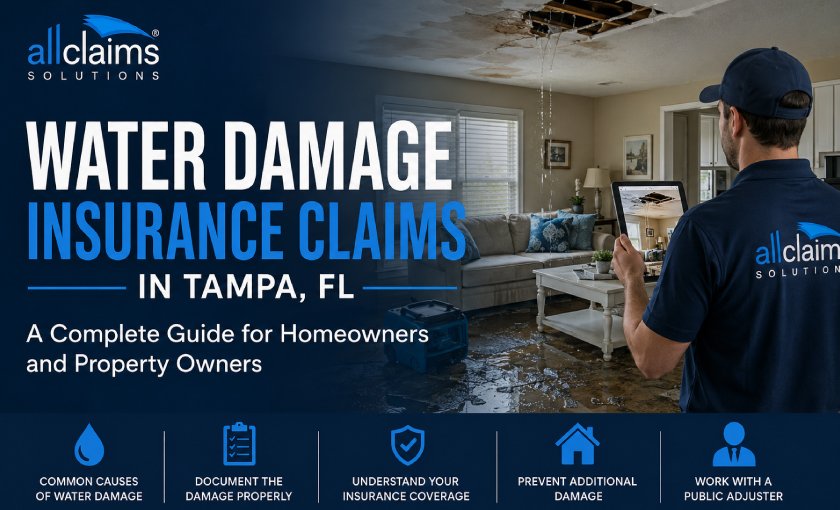
What Every Property Owner Should Know
Water damage is one of the most common reasons homeowners and business owners file property insurance claims in Florida. Whether caused by a severe storm, a plumbing failure, a roof leak, or an appliance malfunction, water can spread quickly throughout a property and affect structural components, flooring, walls, insulation, cabinetry, and personal belongings.
For property owners in Tampa, understanding how the insurance claims process works after water damage is an important first step toward protecting your investment and preparing the documentation needed for a successful claim.
In this guide, we’ll explain common causes of water damage, what to do immediately after discovering the damage, and how professional documentation can help support the insurance claims process.
What Is Considered Water Damage?
Water damage refers to physical damage caused by the unintended release or intrusion of water into a property.
Common examples include:
- Roof leaks after severe storms
- Burst or leaking pipes
- Broken water heaters
- Appliance failures
- Overflowing sinks or toilets
- HVAC system leaks
- Water intrusion through windows or doors
- Heavy rainfall entering the property
- Storm-related roof damage
Because water can travel through walls, ceilings, and flooring, the full extent of the damage may not always be immediately visible.
Common Causes of Water Damage in Tampa
Tampa’s subtropical climate means property owners frequently deal with weather-related water intrusion.
Some of the most common causes include:
Hurricane & Tropical Storm Damage
High winds and heavy rain can damage roofing systems, allowing water to enter attics, ceilings, and living spaces.
Roof Leaks
Missing shingles, damaged flashing, and aging roofing materials often lead to leaks during heavy rainfall.
Plumbing Failures
Burst pipes, leaking supply lines, and broken plumbing fixtures can release large amounts of water into a property.
Appliance Malfunctions
Dishwashers, washing machines, refrigerators, and water heaters may leak unexpectedly.
Overflowing Fixtures
Sinks, bathtubs, and toilets can overflow due to clogs or plumbing failures.
HVAC System Leaks
Air conditioning systems can sometimes create water damage if condensate drain lines become blocked.
What Should You Do After Discovering Water Damage?
Taking prompt action may help reduce additional damage and preserve important documentation.
Recommended steps include:
- Prioritize safety before entering affected areas.
- Shut off the water source if possible.
- Photograph and record all visible damage.
- Document damaged personal belongings.
- Save receipts for emergency mitigation work.
- Avoid making permanent repairs before documenting the condition.
- Review your insurance policy.
Keeping organized records can help throughout the insurance claims process.
Areas Commonly Affected by Water Damage
Water can impact many parts of a property, including:
- Roof systems
- Ceilings
- Drywall
- Flooring
- Cabinets
- Baseboards
- Insulation
- Electrical systems
- HVAC equipment
- Personal belongings
Some damage may remain hidden behind walls or beneath flooring, making professional inspections especially valuable.
The Importance of Thorough Documentation
Water damage often spreads beyond the original source.
Proper documentation may include:
- Photographs
- Videos
- Moisture readings
- Inspection notes
- Measurements
- Damage inventories
- Supporting records
Detailed documentation helps establish a clear record of the property’s condition following a covered event.
Can Water Damage Lead to Mold?
Yes.
If moisture remains inside a property for an extended period, conditions may become favorable for mold growth.
Mold may develop:
- Behind drywall
- Under flooring
- Inside insulation
- Around HVAC systems
- Inside cabinets
- Around plumbing systems
Early identification and documentation can help property owners better understand the extent of moisture-related damage.
Understanding the Water Damage Insurance Claim Process
Although every claim is different, most water damage claims involve several important stages.
1. Property Inspection
The affected areas are inspected to evaluate visible damage.
2. Insurance Policy Review
The policy is reviewed to understand available coverage.
3. Damage Documentation
Photographs, measurements, and supporting information are gathered.
4. Claim Preparation
Documentation is organized before being submitted during the insurance claims process.
5. Claim Review
The insurance company reviews the information provided according to the terms of the policy.
Why Professional Inspections Matter
Water damage is not always limited to what is immediately visible.
Professional inspections may identify:
- Hidden roof leaks
- Moisture inside walls
- Damaged insulation
- Structural concerns
- Areas requiring additional documentation
Early inspections can help create a more complete understanding of the property’s condition.
How a Public Adjuster Can Help
Navigating a water damage insurance claim can involve inspections, documentation, policy interpretation, and ongoing communication.
A licensed Public Adjuster represents the policyholder—not the insurance company—and may assist with:
- Property inspections
- Damage documentation
- Insurance policy reviews
- Claim preparation
- Communication throughout the claims process
At All Claims Solutions, we proudly assist homeowners, businesses, condominium associations, and commercial property owners throughout Tampa with professional guidance and personalized claim support.
Why Tampa Property Owners Choose All Claims Solutions
Our experienced team understands the unique challenges Florida property owners face after water damage.
We proudly provide:
- Licensed Florida Public Adjusters
- Complimentary Property Inspections
- Insurance Policy Reviews
- Residential & Commercial Claim Assistance
- Detailed Damage Documentation
- Personalized Claim Guidance
- No Recovery – No Fee*
Water damage can affect far more than what is visible on the surface. From roof leaks and plumbing failures to storm-related water intrusion, taking organized steps after discovering the damage can help protect your property and prepare you for the insurance claims process.
Documenting the damage, reviewing your insurance policy, and seeking professional guidance can make navigating the claims process more manageable.
Need Help With a Water Damage Insurance Claim in Tampa?
If your home or commercial property has experienced water damage, All Claims Solutions is here to help.
Our licensed Public Adjusters provide professional property inspections, insurance policy reviews, and personalized claim support throughout Tampa and the surrounding communities.
 201 E. Kennedy Blvd #1240, Tampa, FL 33602
 24/7 Assistance: (813) 368-5382
 tampa.allclaimssolutions.com
Frequently Asked Questions
Does homeowners insurance cover water damage?
Coverage depends on the terms, conditions, and exclusions of your individual insurance policy. Reviewing your policy carefully is an important first step after discovering water damage.
What should I do first after discovering water damage?
Prioritize safety, stop the water source if possible, document the damage with photos and videos, protect the property from additional damage, and review your insurance policy.
Can water damage cause hidden problems?
Yes. Water may affect insulation, framing, drywall, flooring, and other structural components that are not immediately visible.
Should I have my property professionally inspected?
Professional inspections can help identify visible and hidden water-related damage and provide detailed documentation for the insurance claims process.