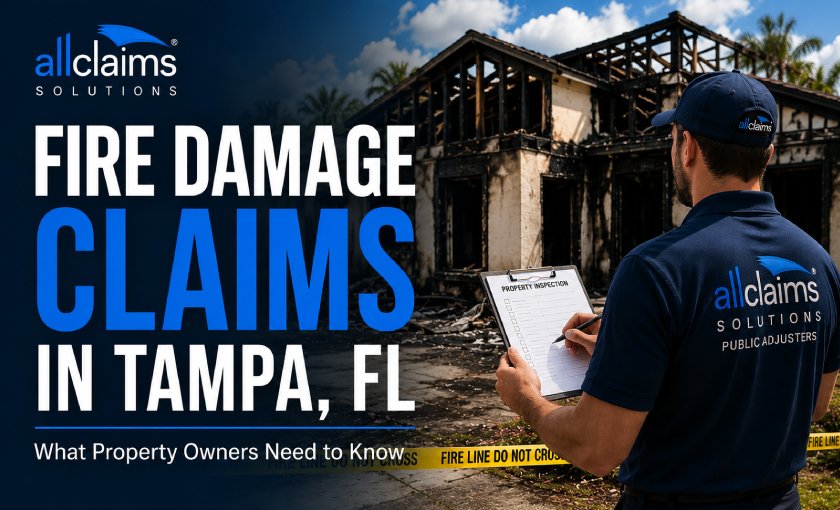
A fire can change a home or business in a matter of minutes. Beyond the visible damage caused by flames, a fire can leave behind smoke, soot, water damage from firefighting efforts, structural problems, and damage to personal or business property.
For property owners in Tampa, Florida, navigating a fire damage insurance claim can be complicated. Understanding your policy, documenting every category of damage, and presenting a comprehensive claim are important steps toward protecting your property and your financial interests.
At All Claims Solutions, our licensed Public Adjusters help homeowners and business owners throughout Tampa manage the insurance claims process. We work for policyholders—not insurance companies—and help document, prepare, and negotiate property damage claims.
What Is a Fire Damage Insurance Claim?
A fire damage insurance claim is a request for benefits under a property insurance policy following a covered fire-related loss.
Depending on the terms of your policy, a fire claim may involve more than repairing the areas directly affected by flames.
Potential categories of damage can include:
- Fire and structural damage
- Smoke and soot damage
- Water damage caused by firefighting
- Damaged roofing and exterior components
- Electrical and mechanical systems
- Furniture and personal belongings
- Appliances and electronics
- Business inventory and equipment
- Debris removal
- Additional living expenses for homeowners
- Business interruption and extra expenses for businesses
Because every insurance policy is different, coverage should always be evaluated based on the specific language, limits, exclusions, and endorsements applicable to the property.
Fire Damage Goes Beyond What You Can See
One of the biggest challenges after a fire is that not all damage is immediately visible.
A property may appear structurally intact while still having significant damage caused by smoke, soot, heat, moisture, or firefighting activities.
Common hidden or secondary damage can include:
- Smoke odor throughout the property
- Soot contamination
- Water-damaged walls and ceilings
- Damaged insulation
- Electrical system problems
- HVAC contamination
- Mold resulting from water exposure
- Structural deterioration
- Damage to contents and personal property
This is why a thorough inspection and detailed documentation are important before determining the full scope of an insurance claim.
Common Types of Fire Damage Claims in Tampa
Residential Fire Damage Claims
Homeowners may face damage to the structure, personal belongings, appliances, furniture, roofing, electrical systems, and other components of the property.
A residential fire claim may also involve additional living expenses if the home becomes temporarily uninhabitable, depending on the policy.
Commercial Fire Damage Claims
For businesses, a fire can create both property damage and significant operational disruption.
Commercial fire claims may involve:
- Building damage
- Equipment
- Inventory
- Furniture
- Business personal property
- Tenant improvements
- Debris removal
- Business interruption
- Extra expenses
A complete commercial claim should account for the different categories of covered loss that apply to the business.
Does Insurance Cover Fire Damage?
Many property insurance policies provide coverage for certain fire-related losses. However, coverage depends on the specific policy and circumstances surrounding the loss.
Important factors may include:
- Cause of the fire
- Policy exclusions
- Deductibles
- Coverage limits
- Property valuation provisions
- Additional endorsements
- Replacement cost or actual cash value provisions
- Additional living expense or business interruption coverage
Rather than assuming that a particular loss is covered or excluded, property owners should review the actual terms of their policy.
What Should You Do After a Fire?
The first priority after a fire is always safety. Follow instructions from emergency personnel and do not enter an unsafe structure.
Once it is safe to begin addressing the property loss, consider these important steps.
1. Document the Damage
Take photographs and videos of the property and damaged items when it is safe to do so.
Document:
- Structural damage
- Smoke and soot
- Water damage
- Damaged contents
- Appliances and electronics
- Roofing and exterior damage
- Areas affected by firefighting efforts
The Florida Department of Financial Services also recommends keeping records of interactions with your insurer and saving receipts for emergency repairs.
2. Make Reasonable Temporary Repairs
If necessary, take reasonable steps to protect the property from additional damage, such as securing openings or addressing emergency water intrusion.
Keep receipts and documentation for these expenses.
Avoid making permanent repairs before the damage has been properly documented and inspected unless immediate action is necessary for safety or to prevent additional damage.
3. Keep Damaged Property When Possible
Do not automatically throw away damaged belongings.
Some items may be needed for inspection or documentation. If an item must be removed for safety or sanitation reasons, photograph it thoroughly and keep records of what was removed.
4. Report the Claim Promptly
Insurance policies typically contain requirements regarding how and when claims must be reported.
Florida law currently provides that notice of a property insurance claim generally must be given according to the policy terms within one year after the date of loss, while supplemental claims generally have an 18-month notice period. Specific circumstances and policy provisions can affect these requirements.
Do not rely on a general deadline. Review your policy and report a loss promptly.
How a Public Adjuster Helps With a Fire Damage Claim
A Public Adjuster represents the policyholder during the insurance claims process.
The Florida Department of Financial Services explains that Public Adjusters can assist policyholders with claim forms and documentation, filing requirements, and pursuing the amount owed under the insurance contract.
At All Claims Solutions, our process can include:
Comprehensive Property Inspection
We evaluate the property to identify visible and potentially hidden damage.
Insurance Policy Review
We review the applicable policy provisions to understand available coverage and claim requirements.
Detailed Damage Documentation
We organize photographs, reports, estimates, inventories, and other supporting documentation.
Claim Preparation
We help prepare the claim documentation so the scope of loss is clearly presented.
Communication With the Insurance Company
We assist with claim-related communications and documentation throughout the process.
Settlement Negotiation
We represent the policyholder in negotiations with the insurance company regarding the documented loss and applicable policy coverage.
What About Smoke and Soot Damage?
Smoke damage can extend throughout a property, even into areas that were not directly affected by flames.
Smoke and soot may affect:
- Walls
- Ceilings
- Flooring
- Furniture
- Clothing
- Electronics
- HVAC systems
- Personal belongings
- Business inventory
The presence of smoke odor or soot contamination should not automatically be treated as a cosmetic issue. The appropriate scope of cleaning, restoration, or replacement depends on the nature of the damage and applicable policy coverage.
What About Water Damage After a Fire?
Firefighting efforts can introduce substantial amounts of water into a property.
As a result, a single fire loss may involve multiple categories of damage:
Fire → Smoke & Soot → Water → Mold or Structural Damage
This makes comprehensive documentation especially important.
A property owner should consider the entire loss rather than focusing exclusively on the areas directly burned by the fire.
Business Interruption After a Commercial Fire
For business owners, the financial impact of a fire may continue long after the flames are extinguished.
If covered under the policy, business interruption insurance may help address certain lost income or additional expenses associated with a covered property loss.
Potential considerations can include:
- Lost business income
- Temporary relocation
- Additional operating expenses
- Continuing expenses
- Restoration-related interruptions
Coverage varies significantly by policy, so a detailed review of the commercial insurance policy is important.
Common Fire Insurance Claim Mistakes
Property owners can unintentionally make the claims process more difficult by:
Underestimating the Damage
Focusing only on visible fire damage may leave smoke, water, structural, or contents losses undocumented.
Discarding Damaged Items Too Quickly
Some damaged property may need to be inspected or documented.
Making Permanent Repairs Before Documentation
Significant repairs can make it harder to demonstrate the original scope of damage.
Failing to Keep Receipts
Emergency expenses and temporary repairs should be documented and supported by receipts.
Accepting an Estimate Without Reviewing the Scope
An initial estimate may not necessarily reflect every category of damage or the final cost of restoration.
Waiting Too Long to Report the Loss
Insurance policies and Florida law contain claim-notice requirements. Prompt action is important.
Why Tampa Property Owners Choose All Claims Solutions
Fire damage claims require careful documentation and attention to detail.
At All Claims Solutions, our licensed Public Adjusters help Tampa property owners navigate the process from inspection through settlement.
Our services include:
- Free property inspections
- Insurance policy review
- Comprehensive damage documentation
- Residential fire claims
- Commercial fire claims
- Smoke and soot damage claims
- Water damage associated with fire losses
- Business interruption claim assistance
- Claim preparation and management
- Settlement negotiation
We Work for You—Not the Insurance Company.
Our goal is to help policyholders understand their claim, document their loss, and pursue the benefits available under their insurance policy.Adjusters can help protect your investment.
All Claims Solutions — Trusted Commercial Public Adjusters Serving Tampa, FL.
 201 E. Kennedy Blvd #1240, Tampa, FL 33602
 24/7 Assistance: (813) 368-5382
 tampa.allclaimssolutions.com
Frequently Asked Questions About Fire Damage Claims in Tampa
Current Florida law generally requires notice of a property insurance claim within one year after the date of loss, subject to the statute and the terms of the applicable policy. Supplemental claims generally have an 18-month notice period. Because exceptions and policy-specific requirements may apply, property owners should report losses promptly.
Potentially. Smoke and soot can cause damage beyond the area directly affected by flames. Whether the damage is covered depends on the circumstances and your insurance policy.
Coverage depends on the policy and circumstances of the loss. Water damage resulting from firefighting may be part of the overall fire loss, but the applicable coverage should be reviewed under the specific policy.
A Public Adjuster can review the claim and available documentation and may assist with a supplemental or reopened claim when appropriate. The exact options depend on the circumstances, policy, and applicable deadlines.
Yes. Public Adjusters can represent commercial policyholders and assist with documenting building damage, business personal property, inventory, and potentially applicable business interruption losses.
Get Help With Your Fire Damage Claim in Tampa
A fire can leave behind much more than visible structural damage. Smoke, soot, water, contents, and business interruption can all contribute to the overall financial impact of a loss.
If your home or business in Tampa, FL has suffered fire damage, the team at All Claims Solutions can help you understand and navigate the insurance claims process.
Schedule Your Free Property Inspection
All Claims Solutions
Licensed Public Adjusters Serving Tampa, FL
We Work for You—not the Insurance Company.
No Recovery – No Fee.
Types of Insurance Claims in Tampa FL
Water Damage >
Fire Damage >
Storm Damage >
Flood Damage >
Mold damage >
Structural Damage >