
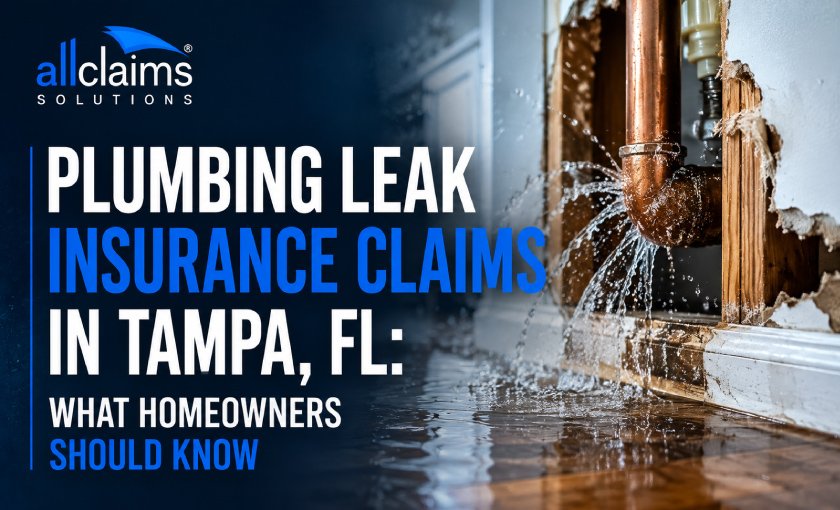
A plumbing leak can start with something that seems relatively minor—a dripping pipe, a leaking water heater, or a broken supply line—and quickly turn into a major property insurance problem.
Water can spread behind walls, under flooring, through ceilings, and into cabinets and insulation. If the problem is not addressed quickly, it can also contribute to mold and additional structural damage.
For homeowners in Tampa, one of the most important questions after discovering a plumbing leak is:
Does homeowners insurance cover the damage caused by the leak?
The answer depends on what caused the leak, how sudden or accidental the loss was, what damage occurred, and the specific terms of your insurance policy.
Florida’s Department of Financial Services specifically identifies a sudden and accidental discharge of water from a burst pipe as an example of a covered peril that can result in water damage and potentially mold-related coverage, although policy limits and exclusions can apply.
At All Claims Solutions, our Public Adjusters help homeowners and property owners throughout Tampa document property damage, prepare insurance claims, and navigate the claims process.
We Work for You—not the Insurance Company.
What Is a Plumbing Leak Insurance Claim?
A plumbing leak insurance claim is a property insurance claim involving damage caused by water escaping from a plumbing system or related component.
Common examples include:
- Burst pipes
- Broken supply lines
- Water heater failures
- Washing machine hose leaks
- Dishwasher leaks
- Refrigerator supply-line leaks
- Toilet supply-line failures
- Sink plumbing leaks
- Pipe connections that suddenly fail
- Hidden plumbing leaks
- Accidental overflow from plumbing fixtures
However, not every plumbing leak is automatically covered.
Insurance companies may distinguish between a sudden, accidental plumbing failure and damage associated with long-term deterioration, repeated leakage, wear and tear, or maintenance issues.
That’s why determining the cause of the leak is one of the first steps in evaluating a plumbing damage claim.
Does Homeowners Insurance Cover Plumbing Leaks in Tampa?
It may—but coverage depends on the circumstances.
A sudden and accidental plumbing failure may result in covered water damage under many homeowners policies.
For example:
Pipe suddenly bursts
↓
Water escapes
↓
Drywall and flooring become damaged
↓
Homeowners insurance claim
This can be very different from:
Small leak develops
↓
Leak continues for months
↓
Gradual deterioration occurs
↓
Water damage and mold develop
The second scenario may raise questions about exclusions related to wear and tear, deterioration, repeated seepage, or maintenance.
The actual policy language and facts of the loss should always be reviewed.
What Types of Plumbing Damage May Be Covered?
Depending on the policy and circumstances, a plumbing-related claim can potentially involve several different categories of damage.
Water Damage
Water may damage:
- Drywall
- Ceilings
- Flooring
- Baseboards
- Cabinets
- Walls
- Insulation
Structural Damage
If water remains inside building materials, additional damage may develop.
Personal Property
Water can damage:
- Furniture
- Electronics
- Clothing
- Appliances
- Personal belongings
- Other contents
Mold Damage
Mold can develop when moisture remains in affected materials.
The Florida Department of Financial Services notes that mold resulting from a covered peril may be covered, although mold-related coverage can be limited or excluded depending on the policy.
Common Plumbing Problems That Can Lead to Insurance Claims
Burst Pipes
A pipe suddenly breaks and releases a significant amount of water.
This can create extensive damage in a short period of time.
Water Heater Leaks
A failed water heater can release a large amount of water into a garage, utility room, or interior space.
Washing Machine Hose Failure
A damaged or disconnected washing machine supply hose can release water rapidly and affect flooring, walls, and nearby rooms.
Dishwasher Leaks
A dishwasher leak can damage kitchen cabinets, flooring, and subflooring.
Because much of the plumbing is hidden, damage may not become obvious immediately.
Refrigerator Water Line Leaks
Refrigerator supply lines can leak behind appliances and cause hidden moisture damage.
Hidden Pipe Leaks
A leak inside a wall can continue for an unknown period of time before becoming visible.
Signs can include:
- Discolored walls
- Bubbling paint
- Soft drywall
- Musty odors
- Warped flooring
- Increased water bills
- Visible mold
What Is Usually More Difficult to Cover?
Plumbing claims can become more complicated when the damage appears to have developed gradually.
Potential issues include:
- Long-term leaks
- Corrosion
- Wear and tear
- Deteriorated pipes
- Lack of maintenance
- Repeated leakage
- Long-term seepage
- Pre-existing damage
This doesn’t necessarily mean the entire claim is automatically excluded.
It means the cause of loss and applicable policy provisions need to be carefully evaluated.
Does Insurance Pay to Replace the Broken Pipe?
This is an important distinction.
There can be a difference between:
The plumbing component that failed
and
The resulting property damage.
For example:
Broken pipe
→ Pipe repair/replacement
Resulting water
→ Damaged drywall, flooring, cabinets, etc.
Your policy may treat these components differently.
Don’t assume that because the pipe itself isn’t covered, the resulting water damage is automatically excluded—or vice versa.
The policy language and facts of the loss matter.
How Much Damage Can a Small Plumbing Leak Cause?
A plumbing leak doesn’t have to produce standing water throughout your house to become a significant insurance claim.
Water can travel through building materials and affect areas that are not immediately visible.
For example:
Kitchen Leak
→ Cabinets
→ Flooring
→ Subfloor
→ Baseboards
→ Adjacent walls
→ Insulation
→ Mold
The visible damage may represent only part of the total loss.
This is one reason why a thorough inspection and documentation process can be important.
Hidden Water Damage After a Plumbing Leak
Some of the most expensive damage can occur behind the surfaces you can see.
Water may become trapped:
- Behind drywall
- Under flooring
- Inside cabinets
- Under appliances
- Inside walls
- Around plumbing penetrations
- In insulation
- Under baseboards
Signs of hidden water damage can include:
Staining
Brown or yellow discoloration on ceilings or walls.
Warped Materials
Flooring, cabinets, or trim may swell or deform.
Soft Drywall
Walls may feel soft or weak after prolonged moisture exposure.
Musty Odors
Persistent odors can indicate moisture or mold.
Peeling Paint
Moisture behind a wall can cause paint to bubble or peel.
What Should You Do After a Plumbing Leak?
If you discover a plumbing leak in your Tampa home, taking organized steps can help protect both your property and your insurance claim.
1. Stop the Source
If it is safe to do so, shut off the appropriate water supply.
For major leaks, professional plumbing assistance may be necessary.
2. Protect Yourself
Avoid electrical hazards and areas with potential structural damage.
Safety should always come first.
3. Document the Damage
Take photographs and videos of:
- The leaking pipe
- The source of the water
- Standing water
- Damaged walls
- Damaged ceilings
- Flooring
- Cabinets
- Baseboards
- Personal property
- Visible mold
- Exterior conditions if relevant
Try to document the condition before major cleanup or repairs, when reasonably possible.
4. Take Reasonable Steps to Prevent Further Damage
Florida insurance guidance emphasizes the importance of documenting property and providing detailed information during the claims process.
Keep records of:
- Emergency services
- Water extraction
- Plumbing invoices
- Temporary repairs
- Receipts
- Photographs
- Inspection reports
5. Notify Your Insurance Company
Follow the notice requirements in your policy.
Keep track of:
- Claim number
- Date reported
- Adjuster’s name
- Adjuster’s license number
- Inspection dates
- Communications
- Estimates
- Coverage decisions
Florida law requires insurers to acknowledge claim-related communications within specified timeframes and establishes requirements concerning claim investigation and inspections.
Document the Source of the Leak
One of the most important pieces of evidence in a plumbing insurance claim can be documentation showing what caused the loss.
Consider obtaining documentation from a qualified plumber describing:
- What failed
- Where the failure occurred
- Whether it appears sudden or gradual
- The condition of the plumbing component
- The amount of water released
- Repairs performed
- Any additional findings
This documentation can help establish the timeline and circumstances of the loss.
What About Mold After a Plumbing Leak?
Mold is one of the biggest concerns following a water loss.
The progression can look like:
Plumbing Leak
↓
Water Damage
↓
Moisture
↓
Mold Growth
The Florida Department of Financial Services states that mold resulting from a covered peril may be covered under a homeowners policy, but insurers may impose mold limits or exclusions.
That’s why homeowners should not treat visible mold as an isolated problem.
The underlying plumbing and water damage should also be documented.
For more information, we recommend linking this article to our existing:
Mold Insurance Claims in Tampa, FL: What Property Owners Need to Know
What If the Leak Is Behind a Wall?
Hidden plumbing leaks can create particularly complicated claims.
A homeowner may notice:
- A stain
- A strange smell
- Peeling paint
- Mold
- Swollen baseboards
But the actual source may be hidden inside the wall.
A thorough investigation may be necessary to determine:
- Where the leak originated
- How long it may have been occurring
- Which materials were affected
- Whether moisture remains
- Whether mold is present
- What repairs are necessary
This is particularly important when the visible damage appears relatively small but the underlying moisture problem may be larger.
Plumbing Leak vs. Flood Damage
A plumbing leak and a flood are not necessarily the same type of insurance loss.
For example:
Burst Pipe
Pipe breaks inside the home → water damages property
versus:
Flood
Rising surface water enters the property
These scenarios can have very different insurance implications.
Standard homeowners insurance generally does not provide flood coverage, which is why understanding the source of the water is critical.
This article should link internally to:
Water Damage vs. Flood Damage in Tampa, FL: What Does Insurance Cover?
That will also strengthen the Tampa site’s topical authority around water-related insurance claims.
What If the Insurance Company Denies Your Plumbing Claim?
A plumbing insurance claim may be denied or limited for reasons such as:
- Wear and tear
- Long-term leakage
- Lack of maintenance
- Deterioration
- Excluded causes
- Pre-existing damage
- Flooding
- Insufficient documentation
- Policy exclusions
If your claim is denied, don’t simply focus on the word “denied.”
First understand:
Why was the claim denied?
Review:
- The denial letter
- The policy language
- The insurer’s inspection
- Photographs
- Plumbing reports
- Repair estimates
- Timeline of the loss
The evidence surrounding the cause and extent of the damage can be important.
What If My Plumbing Claim Is Underpaid?
Not every claim is completely denied.
Sometimes an insurance company accepts a loss but the payment may not reflect the full documented scope of damage.
For example, an initial estimate may address:
- Visible drywall
but fail to fully account for:
- Flooring
- Cabinets
- Baseboards
- Insulation
- Hidden moisture
- Mold remediation
- Additional affected areas
Florida law contains provisions addressing property-insurance claim settlement practices, including certain repair/replacement-cost situations and replacement of adjoining areas when covered items cannot reasonably be matched in quality, color, or size.
The applicability of these provisions depends on the policy and circumstances.
Can a Public Adjuster Help With a Plumbing Leak Claim?
Yes, a Public Adjuster can assist the policyholder with the claims process.
A Public Adjuster works for the property owner, not the insurance company.
For a plumbing leak insurance claim, a Public Adjuster may help with:
Property Inspection
Evaluating the visible scope of property damage.
Damage Documentation
Organizing photographs, measurements, estimates, and supporting documentation.
Cause-of-Loss Documentation
Helping establish the relationship between the plumbing failure and resulting property damage.
Policy Review
Reviewing relevant coverage, exclusions, deductibles, limits, and endorsements.
Claim Preparation
Preparing documentation describing the scope and value of the loss.
Insurance Communication
Helping manage claim-related communication with the carrier.
Negotiation
Representing the policyholder in discussions concerning the documented loss.
Why Documentation Matters in a Plumbing Insurance Claim
A strong claim is not simply:
“My pipe leaked.”
It should tell the complete story:
WHAT HAPPENED?
A plumbing component failed.
WHERE?
Inside the property.
WHEN?
On a documented date or within a documented timeframe.
WHAT WAS DAMAGED?
Walls, flooring, cabinets, ceilings, contents, etc.
HOW EXTENSIVE IS THE DAMAGE?
Visible and potentially hidden areas.
WHAT CAUSED IT?
Documented plumbing failure.
WHAT REPAIRS ARE REQUIRED?
A detailed scope and estimate.
This creates a much clearer picture of the loss.
Common Plumbing Insurance Claim Mistakes
1. Waiting Too Long to Report the Damage
Delays can make it harder to establish the timeline.
2. Cleaning Everything Before Taking Photos
Important evidence can disappear.
3. Only Photographing the Visible Water
Document the source and all affected areas.
4. Ignoring Hidden Damage
Water can travel behind walls and under floors.
5. Throwing Away Damaged Property Without Documentation
Photograph and document damaged belongings whenever reasonably possible.
6. Assuming the Claim Is Too Small
A small leak can create extensive hidden damage.
7. Assuming “Insurance Doesn’t Cover Plumbing”
Coverage depends on the cause, policy language, exclusions, and resulting damage.
8. Accepting an Estimate Without Reviewing the Full Scope
Make sure the documented damage is accurately represented.
Plumbing Leaks in Tampa: Why Florida Conditions Matter
Tampa properties face unique environmental conditions that can make water-related property damage particularly challenging.
Heavy rain, tropical weather, aging plumbing systems, humidity, and high moisture levels can contribute to complicated water-loss scenarios.
A plumbing leak can also lead to secondary problems if moisture isn’t addressed promptly.
Plumbing Leak
↓
Water Intrusion
↓
Hidden Moisture
↓
Material Damage
↓
Mold
The earlier the source and damage are properly documented, the easier it can be to understand the complete scope of the loss.
Why Tampa Homeowners Choose All Claims Solutions
A plumbing leak can become much more than a repair bill.
You may be dealing with:
- Water damage
- Structural damage
- Flooring damage
- Cabinet damage
- Personal property damage
- Mold
- Temporary repairs
- Insurance questions
- A denied or underpaid claim
At All Claims Solutions, our Public Adjusters help homeowners and property owners throughout Tampa and surrounding Gulf Coast communities navigate the insurance claims process.
Our approach focuses on:
INSPECT
↓
DOCUMENT
↓
REVIEW
↓
PREPARE
↓
PRESENT
↓
NEGOTIATE
We Work for You—not the Insurance Company.
No Recovery – No Fee..
If you have experienced property damage, act promptly and review your specific policy.
All Claims Solutions — Trusted Commercial Public Adjusters Serving Tampa, FL.
 201 E. Kennedy Blvd #1240, Tampa, FL 33602
 24/7 Assistance: (813) 368-5382
 tampa.allclaimssolutions.com
Frequently Asked Questions About Plumbing Leak Insurance Claims in Tampa
It may. Coverage depends on the cause of the leak, whether the event was sudden and accidental, the resulting damage, and the specific policy provisions.
A sudden and accidental burst pipe can potentially result in covered water damage. Florida’s Department of Financial Services specifically gives a sudden and accidental discharge of water from a burst pipe as an example of a covered peril, although policy limitations and exclusions can apply.
Not necessarily. Coverage for the failed plumbing component can be treated differently from coverage for resulting property damage. The specific policy should be reviewed.
It depends. Long-term leakage, deterioration, wear and tear, and maintenance issues can create coverage questions or exclusions.
Stop the source if safely possible, protect the property from additional damage, document the loss, keep receipts and reports, and notify your insurance company according to the policy requirements.
Yes. If moisture remains in building materials, mold can develop. Mold coverage may depend on whether the underlying water loss is covered and on the policy’s mold provisions.
A Public Adjuster can help the policyholder document property damage, prepare the claim, communicate with the insurance company, and negotiate the documented loss.
Review the denial explanation, applicable policy language, plumbing documentation, photographs, and scope of damage. A Public Adjuster may be able to help evaluate and document the claim.
Get Help With a Plumbing Leak Insurance Claim in Tampa, FL
A plumbing leak can happen in minutes.
The resulting damage can continue for weeks or even months if hidden moisture isn’t discovered.
If your Tampa home has suffered damage from a burst pipe, plumbing leak, water heater failure, appliance leak, or another plumbing-related event, don’t assume the damage is too small—or that it isn’t covered.
Understanding the cause, scope, and documentation of the loss is an important part of the insurance claims process.
Don’t navigate your property insurance claim alone.
All Claims Solutions – Tampa Public Adjusters
We Work for You—not the Insurance Company.
No Recovery – No Fee.
24/7 Service
This article is provided for general informational purposes only and does not constitute legal advice or a determination of insurance coverage. Coverage depends on the specific insurance policy and circumstances of each loss.
Types of Insurance Claims in Tampa FL
Water Damage >
Fire Damage >
Storm Damage >
Flood Damage >
Mold damage >
Structural Damage >